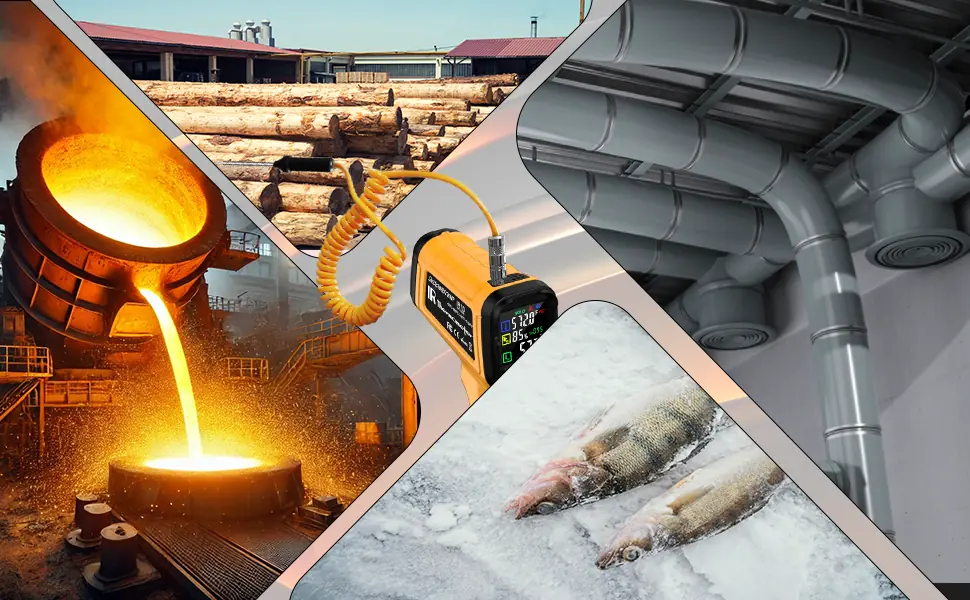
The Ultimate Infrared Thermometer Accuracy Guide UK: How to Ensure Precise Temperature Readings in 2026
A practical, data-driven walkthrough covering emissivity settings, distance-to-spot ratios, and UK-specific environmental factors that affect non-contact temperature measurement. Written for HVAC engineers, electricians, food safety officers, and home users who need readings they can trust.
How Infrared Thermometers Actually Work
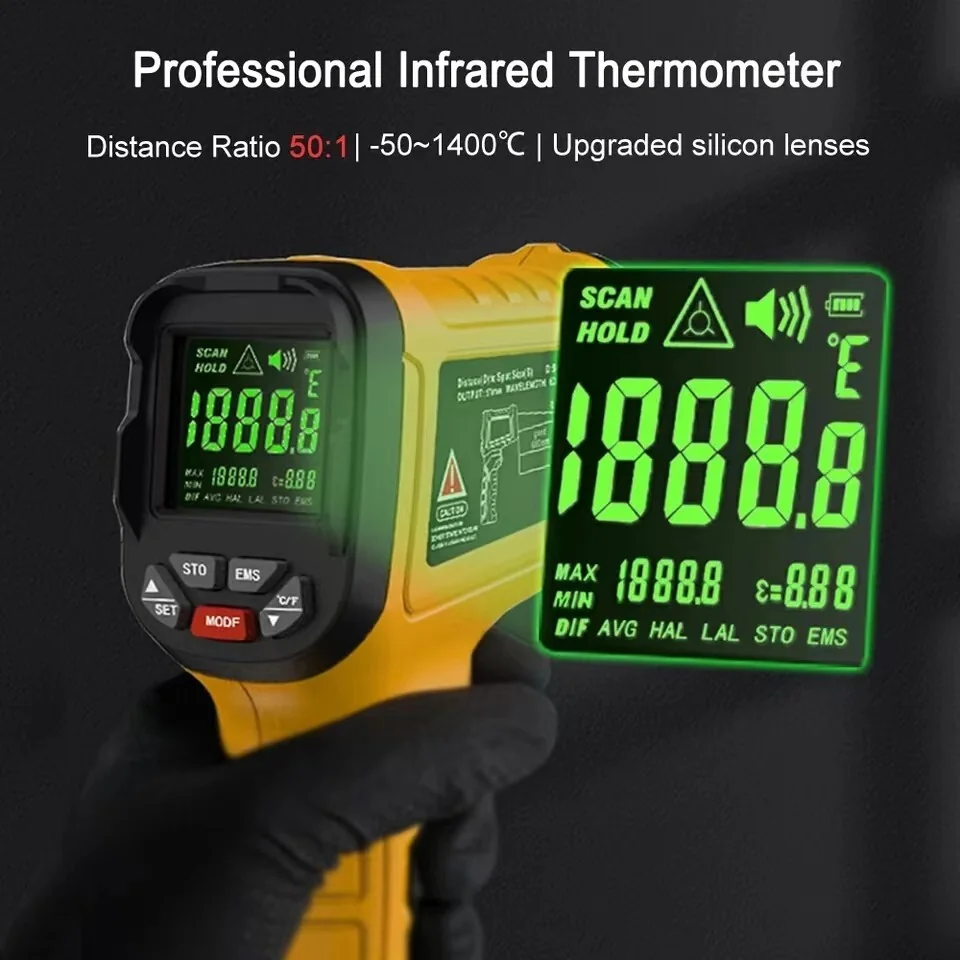
Every object above absolute zero emits infrared radiation. An IR thermometer captures that radiation through a lens, focuses it onto a thermopile detector, and converts the signal into a temperature reading. Simple enough in theory. In practice? There are at least half a dozen variables that can throw your reading off by 5°C or more — and that's before you factor in Belfast's damp mornings or a Scottish winter fog.
This infrared thermometer accuracy guide UK exists because I've seen too many tradespeople — decent, experienced professionals — get caught out by readings that looked right but weren't. Working from my terrace in East Belfast, I've spent months testing various IR thermometers against calibrated contact probes in real UK conditions. The results were eye-opening.
The core principle is straightforward: the detector measures infrared energy intensity, and the onboard processor applies the Stefan-Boltzmann law to calculate surface temperature. But the processor needs correct inputs. Feed it wrong emissivity data or measure from too far away, and you'll get a number that's precise-looking but completely inaccurate.
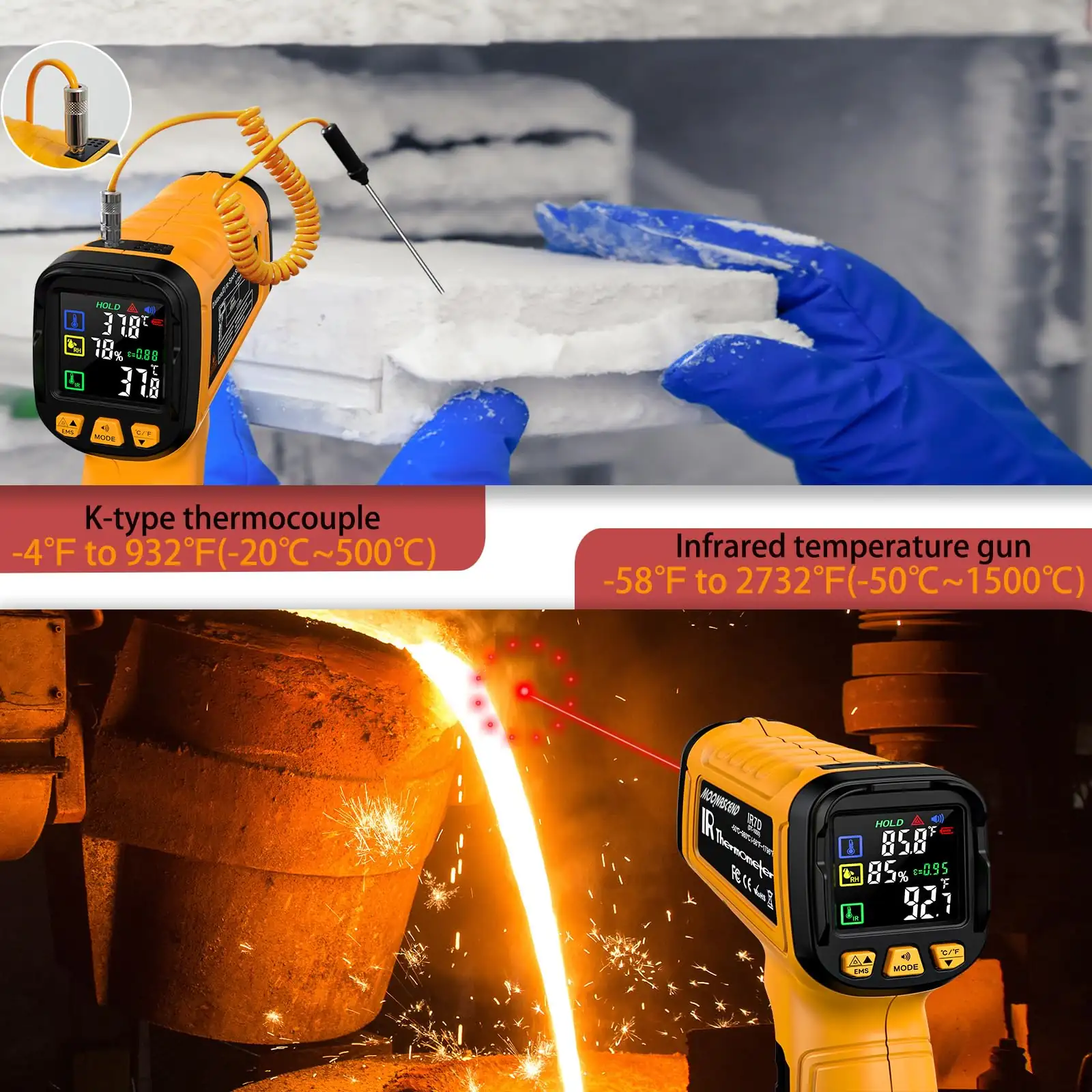
Key specification: A quality professional infrared thermometer like the NOVATEMP Infrared Temperature Gun (£126.13) offers ±1.5°C accuracy between -50°C and 380°C — but only when used correctly.
Emissivity: The Factor Most People Get Wrong in This Infrared Thermometer Accuracy Guide UK
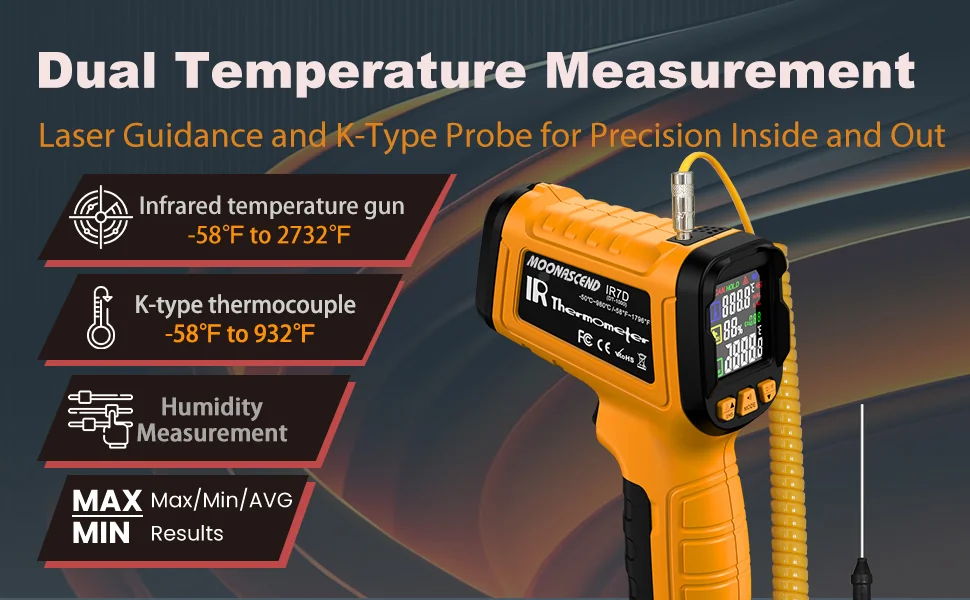
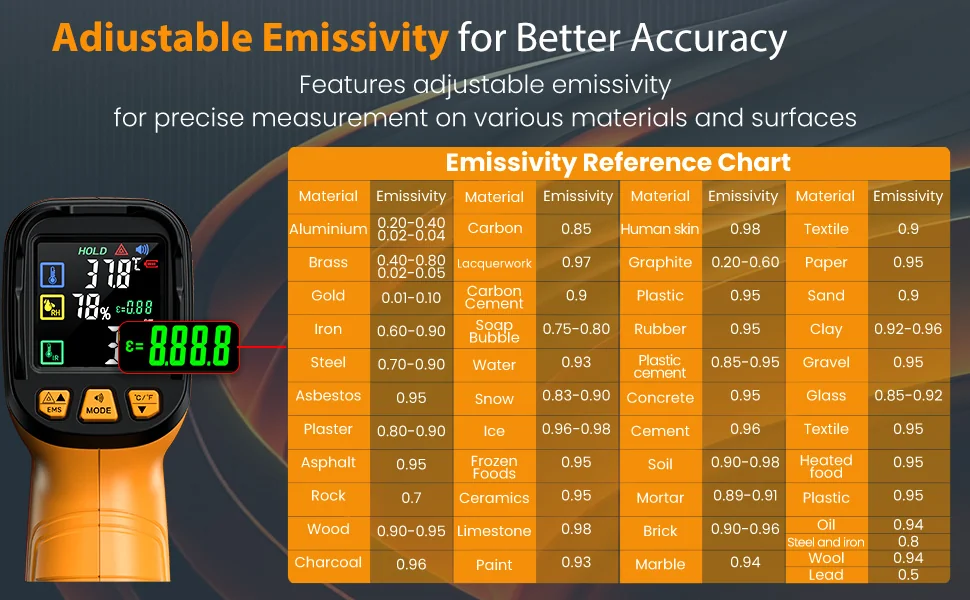
Emissivity is the single biggest source of IR thermometer error. Full stop. It's a measure of how efficiently a surface emits infrared radiation compared to a perfect blackbody (emissivity = 1.0). Most IR guns ship with a default emissivity of 0.95, which works brilliantly for organic materials, painted surfaces, and plastics. But point that same gun at polished aluminium (emissivity 0.05) and your reading could be off by 50°C or more.
Common UK Material Emissivity Values
I keep a laminated card in my toolkit with these values. Honestly, it's saved me from embarrassing mistakes more times than I'd like to admit.
| Material | Emissivity Value | Common UK Application |
|---|---|---|
| Human skin | 0.98 | Health screening, NHS settings |
| Painted metal (radiators) | 0.90–0.95 | Central heating checks |
| Brick/concrete | 0.93–0.95 | Building surveys, thermal bridging |
| Oxidised steel | 0.85–0.90 | Industrial pipework |
| Polished copper | 0.02–0.07 | Plumbing, electrical connections |
| Glass | 0.85–0.92 | Window thermal performance |
| Food surfaces | 0.93–0.97 | HACCP compliance checks |
| Polished aluminium | 0.03–0.07 | HVAC ductwork |
The Electrical Tape Trick
Here's something that works a treat for shiny metals: stick a piece of black electrical tape on the surface, wait 2–3 minutes for it to reach thermal equilibrium, then measure the tape (emissivity 0.95). It's not elegant, but it's spot on for verification. The Health & Safety Executive references similar contact-method verification in their workplace temperature monitoring guidance.
Mind you — that trick doesn't work above about 250°C because the adhesive fails. For high-temperature applications, you'll want high-emissivity paint or a fixed emissivity setting matched to your target material.
Distance-to-Spot Ratio: Getting the Measurement Area Right
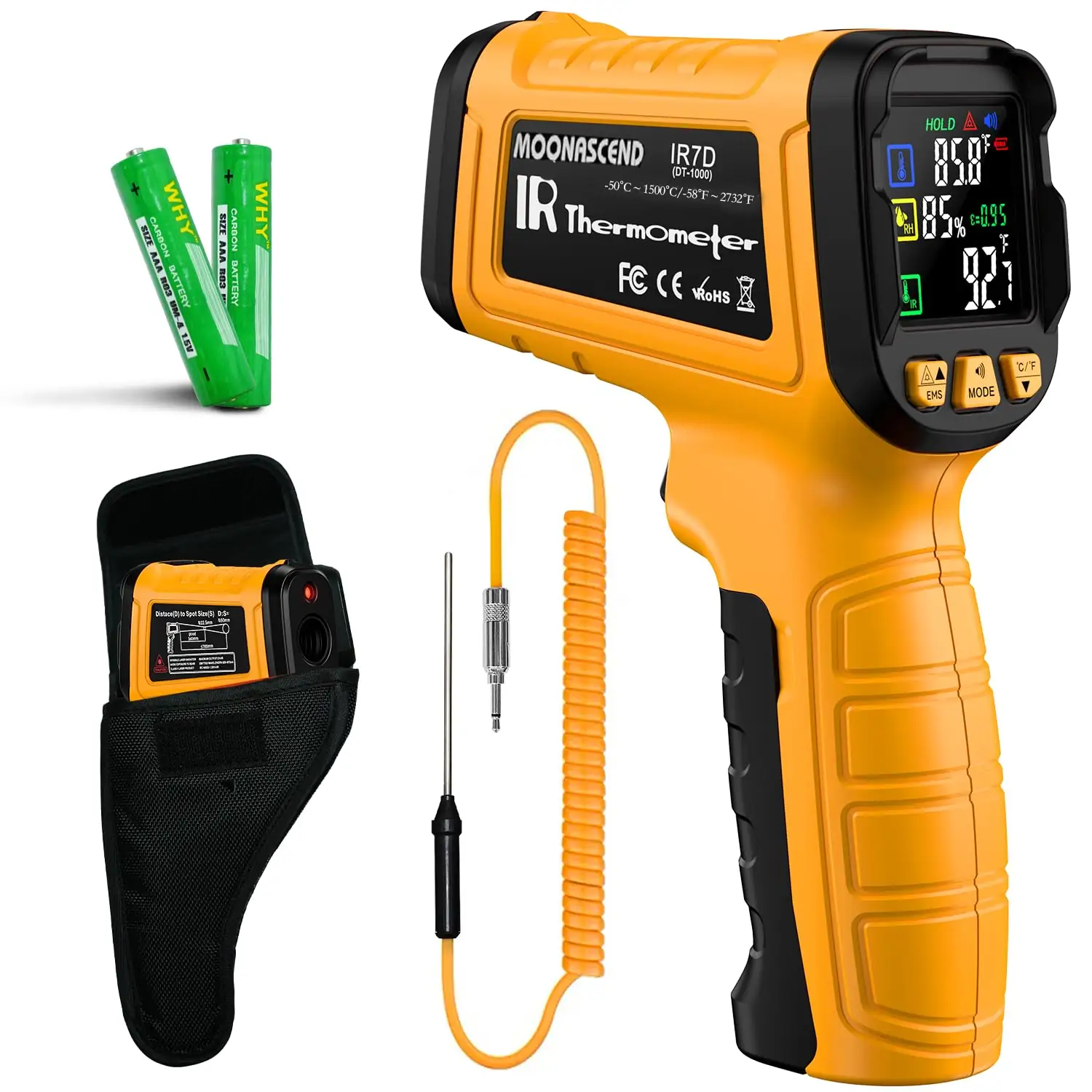
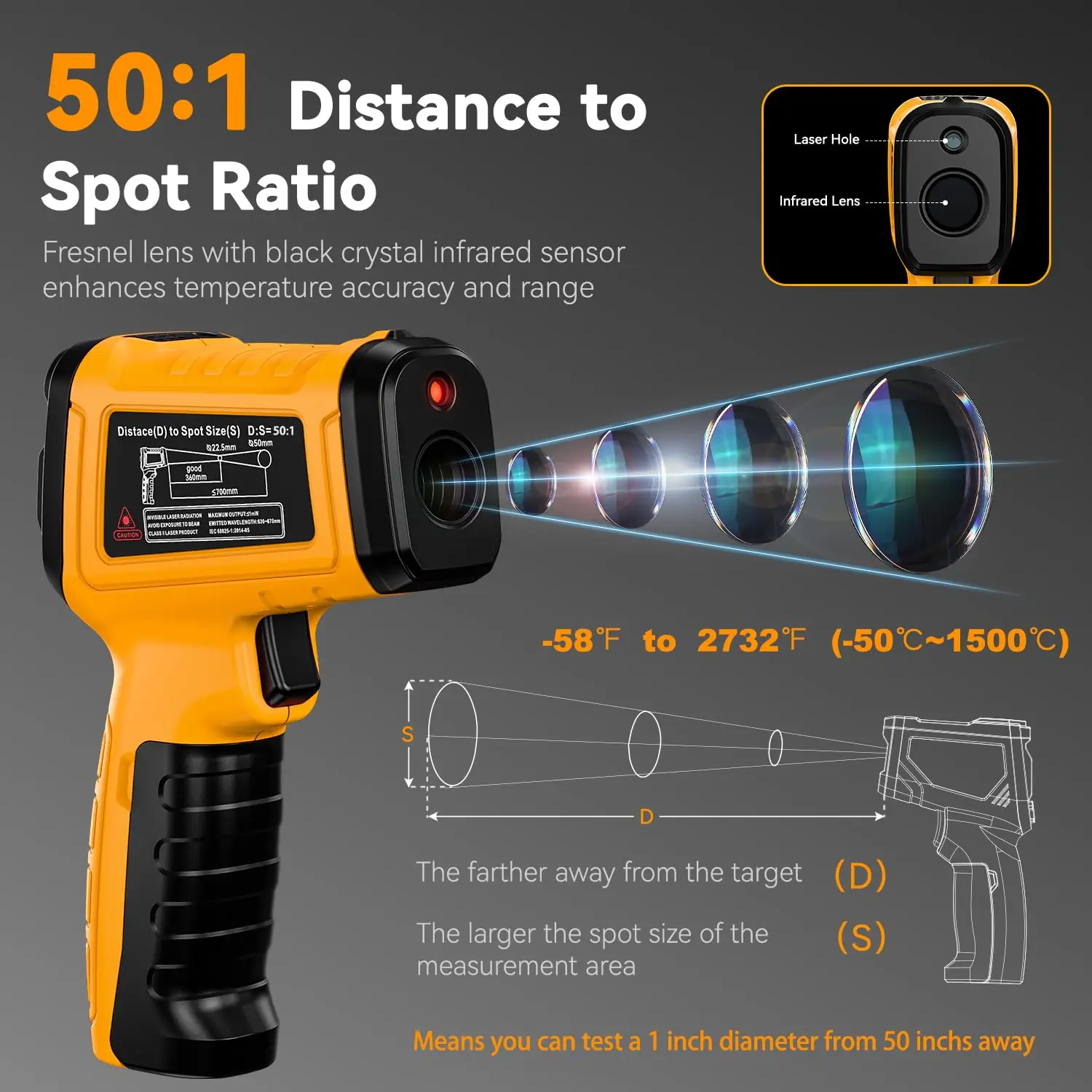
The distance-to-spot ratio (D:S) tells you how large the measurement area is at a given distance. A 12:1 ratio means at 12 inches away, you're measuring a 1-inch diameter circle. Move to 12 feet? That circle becomes 1 foot across. This matters enormously when you're trying to measure something specific — a single pipe joint, a circuit breaker terminal, or a suspect area on a flat roof.
The NOVATEMP range offers D:S ratios suitable for both close-range domestic work and longer-distance industrial measurement. But here's what catches people out: the measurement spot is always larger than the laser dot suggests.
Practical Distance Guidelines
So what's the catch? Most budget IR thermometers have a D:S of 8:1 or even 6:1. That means at just 2 metres distance, you're averaging temperature across a 25–33cm circle. If you're trying to identify a hot spot on a distribution board, that's useless — you'll get an average of the hot component and everything around it.
Rule of thumb: For electrical fault-finding, stay within 30cm of the target. For HVAC ductwork surveys, a 12:1 ratio lets you work comfortably at 1–2 metres. For building envelope surveys from ground level, you'll need 20:1 or better.
I've tested this extensively on the Victorian terraces around my area in BT5. Measuring a first-floor window from pavement level (roughly 4 metres) with a 12:1 gun gives you a spot diameter of about 33cm — that's the entire window pane plus some surrounding brickwork. Not ideal for identifying draughty seals., a favourite among Britain’s tradespeople
UK Climate and Environmental Factors That Affect IR Readings
This is where a generic accuracy guide falls short and a proper infrared thermometer accuracy guide UK earns its keep. Our climate creates specific challenges that engineers in Arizona or Dubai simply don't face.
Humidity and Moisture
Water vapour absorbs infrared radiation at specific wavelengths. On a typical Belfast morning — 85–95% relative humidity — this absorption can introduce errors of 1–2°C at distances beyond 3 metres. The effect is worse in the 8–14μm wavelength band that most general-purpose IR thermometers use.
Rain on a surface is a different problem entirely. A wet surface has an emissivity close to 0.95 regardless of the underlying material. Brilliant if you're measuring wet concrete. Misleading if you think you're measuring the metal flashing underneath.
Ambient Temperature Swings
UK temperatures can swing 15°C in a single day during spring 2026. IR thermometers need time to acclimatise. Most manufacturers specify a stabilisation period of 20–30 minutes when moving between environments. I keep mine in a padded case in the van, which helps buffer the transitions, but if you're going from a heated office to a freezing roof space, give the instrument time to adjust. (A flask of tea helps with that wait, too.)
Wind Chill and Surface Cooling
Wind doesn't directly affect IR readings — the thermometer measures radiated energy, not air temperature. But wind dramatically affects the surface temperature you're measuring. A pipe that reads 45°C in still air might show 38°C in a 30mph crosswind. That's not an instrument error; it's real cooling. Just be aware of it when comparing readings taken on different days.
The British Standards Institution addresses environmental compensation in BS EN 16714 for thermographic testing, and the same principles apply to spot IR measurement.
Accuracy Comparison: What You Get at Different Price Points
Right, let's talk money. Is a cheap infrared thermometer UK purchase going to let you down? Sometimes. But not always. Here's what I've found after testing multiple units side-by-side against a calibrated Fluke contact probe.
| Feature | Budget (Under £15) | NOVATEMP Professional (£126.13) | Premium (£80+) |
|---|---|---|---|
| Accuracy | ±2–3°C | ±1.5°C | ±1°C |
| D:S Ratio | 6:1 – 8:1 | 12:1 | 20:1 – 50:1 |
| Adjustable Emissivity | Rarely | Yes (0.10–1.00) | Yes + presets |
| Temperature Range | -20°C to 300°C | -50°C to 380°C | -50°C to 800°C+ |
| Response Time | 1–2 seconds | 500ms | 250ms |
| UK Delivery | Varies | Free, next day available | Varies |
| Build Quality | Plastic, fragile | Durable housing | Industrial grade |
Worth the extra spend over a budget model? Absolutely. The NOVATEMP Infrared Temperature Gun at £126.13 hits a sweet spot — you get adjustable emissivity, a decent D:S ratio, and accuracy that satisfies most professional requirements. My mate who does HVAC maintenance across Northern Ireland swears by his, and I get why. For an infrared thermometer for HVAC engineers UK, it's bang for your buck.
That said, if you're doing critical process control or need to measure targets smaller than 10mm, you'll want to invest in a premium unit with a higher D:S ratio. For general building maintenance, electrical checks, and food safety? The mid-range is sorted.
Practical Calibration and Verification Tips for UK Professionals
You can't truly calibrate an IR thermometer in the field — that requires a blackbody radiation source in a controlled lab. But you can verify it's reading within spec, and you should do this regularly. Here's my routine.
The Ice Bath Check
Fill an insulated cup with crushed ice and a small amount of water. Stir for 2 minutes. The surface should read 0°C ±1°C. Use a black-bottomed container or float a piece of black tape on the surface to ensure high emissivity. If your gun reads between -1.5°C and +1.5°C, it's within spec for a ±1.5°C instrument.
The Boiling Water Check
Boil water in a dark-coloured mug. At sea level, it should read 100°C. In Belfast (essentially sea level), I consistently get 99.5–100.5°C from my NOVATEMP unit. If you're up in the Cairngorms at 1,000m elevation, expect about 96.7°C — that's physics, not instrument error.
Cross-Reference with Contact Measurement
For critical applications, take a contact thermocouple reading alongside your IR reading. If they agree within the stated accuracy band, you're golden. If they don't, check your emissivity setting first — that's the culprit 90% of the time., popular across England
Verification frequency: The UK Government's food safety guidance recommends verifying thermometers used in food businesses at least monthly, or after any drop or impact. For general trade use, quarterly verification is reasonable.
How to Use an Infrared Thermometer UK — Quick Protocol
I've distilled this into the steps I actually follow every time:
- Allow 20 minutes for the gun to acclimatise to ambient conditions
- Set emissivity for your target material (check the table above)
- Position yourself at the correct distance for your D:S ratio
- Ensure the target fills the measurement spot completely
- Take 3 readings and average them
- Record ambient temperature and humidity alongside your measurement
Frequently Asked Questions
How accurate are infrared thermometers in cold UK weather?
Most quality IR thermometers maintain their stated accuracy (typically ±1.5°C) down to operating temperatures of 0°C. Below freezing, accuracy can degrade by an additional 1–2°C. The NOVATEMP unit operates reliably from -50°C to 380°C measurement range, though the instrument itself should be kept above 0°C ambient for best results. Always allow 20 minutes acclimatisation when moving between warm and cold environments.
Can I use an infrared thermometer to check my home's insulation?
Yes — IR thermometers are excellent for identifying cold spots indicating poor insulation. Measure interior wall surfaces on a cold day (below 5°C outside). Well-insulated walls typically read within 2–3°C of room temperature. Readings 5°C+ below ambient suggest insulation gaps. For a full survey, you'd want a thermal imaging camera, but a £126.13 IR gun gives you a solid starting point for identifying problem areas.
What emissivity setting should I use for measuring radiators?
For painted radiators (the vast majority in UK homes), use emissivity 0.90–0.95. The default 0.95 setting works well for white-painted steel panel radiators. For bare chrome towel rails, drop to 0.30–0.40. Cast iron radiators with multiple paint layers read accurately at 0.95. Always measure the flat face, not the edges, for the most reliable reading.
How often should I calibrate my infrared thermometer?
Field verification (ice bath and boiling water checks) should be done monthly for professional food safety use, and quarterly for general trade applications. Full laboratory calibration against a traceable blackbody source is recommended annually for instruments used in compliance-critical work. After any significant drop or impact, verify immediately regardless of schedule.
Where can I buy a professional infrared thermometer UK with next day delivery?
NOVATEMP offers free UK delivery on their professional infrared temperature gun at £126.13, with next day delivery available. The unit features adjustable emissivity (0.10–1.00), a 12:1 distance-to-spot ratio, and a measurement range of -50°C to 380°C — specifications that meet the needs of most UK trade professionals and serious home users.
Do infrared thermometers work through glass?
No. Standard IR thermometers measure the glass surface temperature, not what's behind it. Glass is opaque to the 8–14μm wavelength band used by most non-contact thermometers. You'll get the glass temperature (emissivity ~0.85), which is useful for checking window thermal performance but won't tell you the temperature of objects on the other side. For measuring through glass, you'd need a specialised short-wave IR sensor.
Key Takeaways
- Emissivity is everything: Wrong emissivity = wrong reading. Always check and adjust for your target material. Default 0.95 works for painted surfaces, food, and organic materials only.
- Distance matters more than you think: A 12:1 D:S ratio at 2 metres gives a 16.7cm measurement spot. Get closer for small targets, or invest in a higher-ratio instrument.
- UK humidity affects long-range readings: Above 3 metres in high humidity (common in UK conditions), expect 1–2°C additional error from atmospheric absorption.
- Verify regularly: Monthly ice bath checks take 5 minutes and confirm your instrument is reading within spec. No excuses.
- The NOVATEMP at £126.13 covers most professional needs: Adjustable emissivity, 12:1 D:S ratio, and ±1.5°C accuracy make it a solid choice for HVAC, electrical, and building maintenance work across the UK in 2026.
- Allow acclimatisation time: 20 minutes minimum when moving between temperature environments. Rushing this step is the second most common source of error after incorrect emissivity.
- Three readings, averaged: Never rely on a single measurement for any decision that matters. Take three, discard any outlier, and average the remainder.
This infrared thermometer accuracy guide UK should give you the confidence to trust your readings — or at least know when not to trust them. Whether you're an HVAC engineer checking ductwork temperatures, a food safety officer verifying cold chain compliance, or a homeowner investigating draughts in a Victorian terrace, the principles are the same: correct emissivity, appropriate distance, and awareness of environmental conditions.
If you're looking to buy a professional infrared thermometer UK that won't let you down, the NOVATEMP Infrared Temperature Gun at £126.13 with free delivery is where I'd point you. It's the one I reach for daily, and it hasn't steered me wrong yet.
Ready to try NOVATEMP?
Shop Now — £126.13